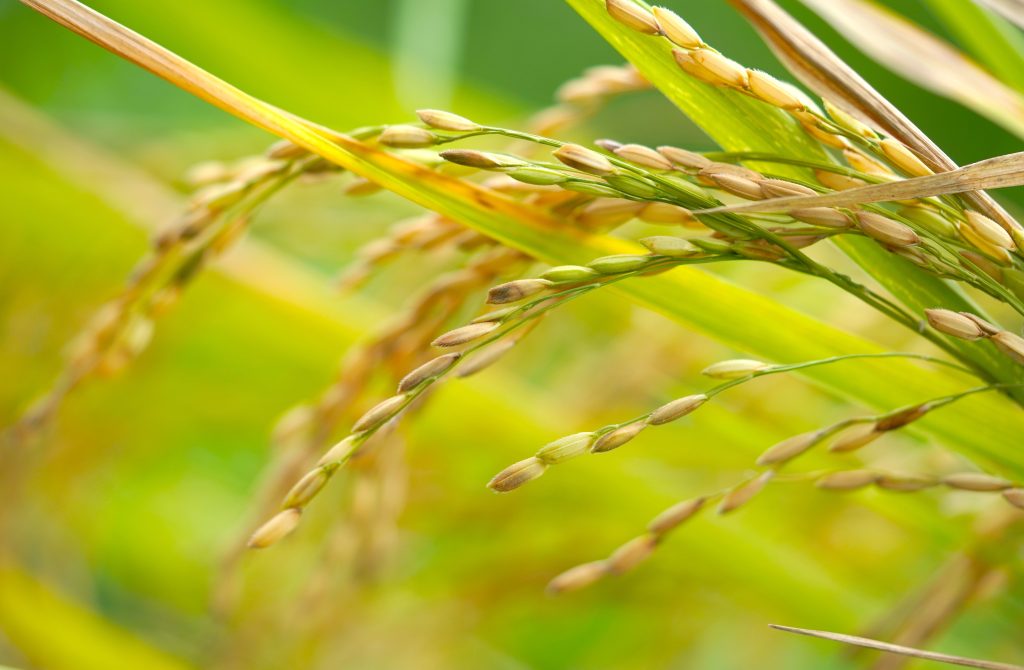
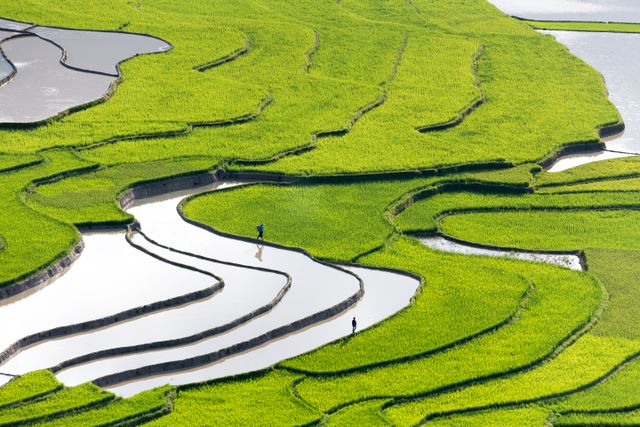
Today I’m going to explore the world of rice paddies, which are areas of land flooded with water, in which rice can be grown. Paddies can be created on flat land and valleys, known as lowland paddies, or carved into gentle hillsides, called terraced paddies.
To make a terraced paddy, you basically create a flat patch on a hillside, and put a small ridge around it, so that it holds just the right amount of water, and any excess can flow down to the next terrace. What a clever idea! If they’d invented it today, the inventor could patent it and make a fortune.
But you know, rice paddies didn’t spring into existence fully formed. They evolved over thousands of years, starting with farmers who simply built mud walls around existing swamps around 5000 BCE, and culminating in those dramatic terraced structures carved into hillsides during the Tang dynasty. The evolution was born out of necessity, not some burning desire to carve terraces into hillsides. As populations grew, farmers started running out of conveniently located natural swampland, and they started moving inland and making changes to what they did over time.
My first encounter with a rice paddy was, strangely, while we were on holiday in Spain. We were taking a little boat trip on a river to get away from the heat, and the boat took us near some rice paddies. It was a surprisingly peaceful experience.
The cleverness of rice paddies lies not just in that they can be carved out of hillsides. They’re a fabulous way of weed control too. Rice loves growing in water, and doesn’t drown easily. So although it doesn’t technically need a huge depth of water, if you keep a certain depth, it will be too much for most weeds to survive, but the rice is happy. I reckon in other types of farming, you have to constantly battle with the weeds trying to outdo whatever crop you might be trying to grow.
So back to the boat trip. It was down a small river, which means that rice paddies don’t have to be created in stagnant water. In fact, stagnant water rice paddies are anaerobic, and can eventually start trapping toxic gases, whereas the flowing water of a river constantly replenishes dissolved oxygen levels around the rice roots, which helps their growth. Obviously you can’t plant rice in a deep, fast-moving river – I doubt the Amazon would be a good candidate for growing rice. But thinking about it, its delta, where it meets the sea may not be a bad spot. Let me check.
Well there you go! Apparently the Amazon delta has been used for rice farming for several thousands of years. It even has a name – estuary farming. Estuary farming in the Amazon isn’t exactly fizzling out, but it is becoming less lucrative than other forms of rice farming. So smallholders are combining estuary rice farming with prawn/fish farming in an effort to raise profits. What a good idea! Imagine being able to source an entire meal from a smallholding in the Amazon estuary!
The next time I saw a rice paddy was when I was on a train in Indonesia. The rice paddies were on a hillside, and what a beautiful sight they were. That lovely, lush green which I’ve only ever seen in photographs was a reality. And people wearing those pointed cane hats, like the one shown below; I absolutely love those hats. In fact, so enamoured was I when I saw them, I brought one back with me to the UK. I wear it while gardening in the summer, when I know the neighbours aren’t looking. I look ridiculous.
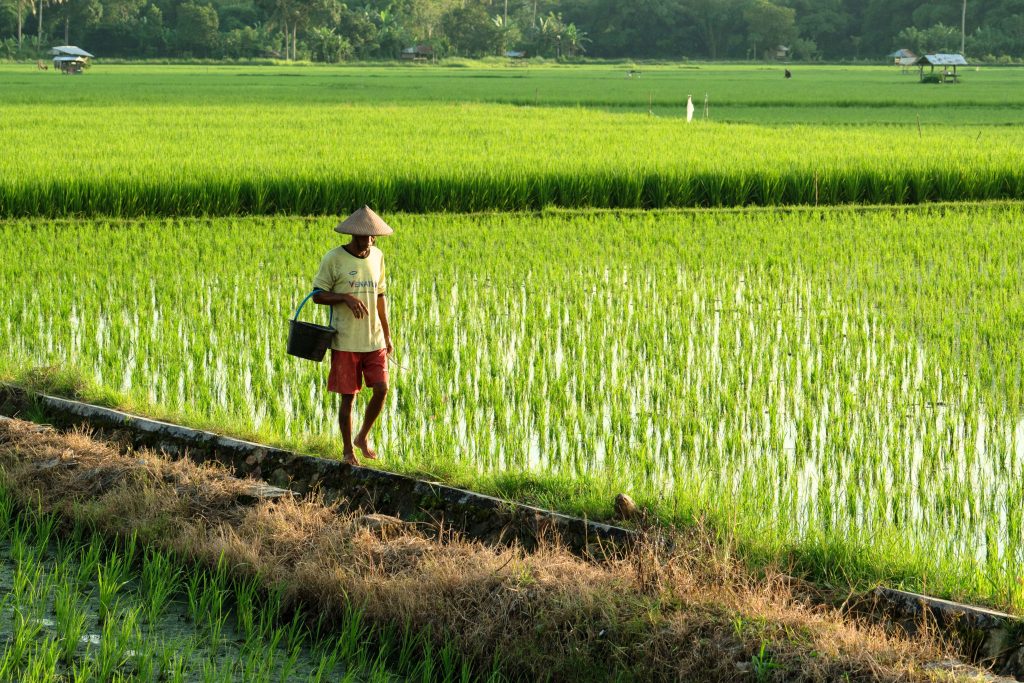
But what looks like a picturesque scene must be hard, backbreaking work. Rice seeds are first grown in small nursery plots. After a few weeks, the seedlings are transplanted in the main paddies. And finally when the rice matures, the paddy is drained and the rice is harvested. None of this sounds easy. So the next time you eat a bowl of rice, spare a thought for the people who helped put it on your plate.
Since I’ve mentioned Indonesia and Spain in my post today, I had a choice of recipe locations. I’ve gone for a “Spanish Rice” recipe adapted from a recipe my mum-in-law taught me. Unlike how we usually eat rice, this is not an accompaniment – it’s the main meal, perfect for a weekday lunch. It’s almost like a Spanish risotto. I had it today. It may not be completely authentic, but it sure is yummy!